Lifestyle
Tesla club performs group ‘Smart Summon’ to simulate an autonomous valet service of the future

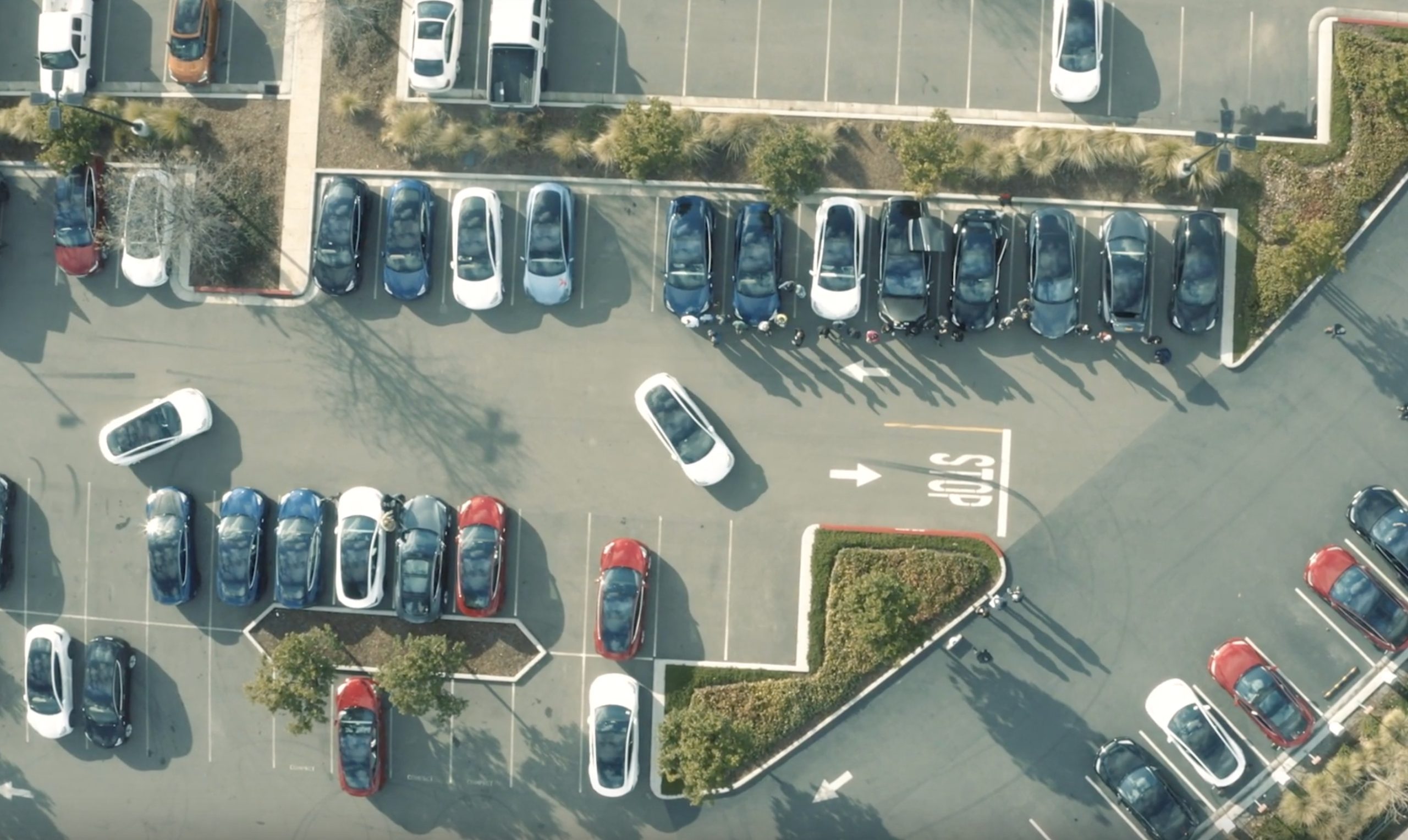
A gathering of Tesla Model 3, Model S, and Model X owners from the official Tesla Owners of Silicon Valley Club got together over the weekend for a Cars and Coffee event to foster camaraderie in the community. But the biggest highlight of the day, outside of a Frunk N Swap activity wherein club members exchanged popular accessories and personal items from their vehicle’s front trunk, was a group Smart Summon activity that simulated an autonomous valet service of the future.
Roughly 80 Tesla owners and enthusiasts met up at the Cherry Avenue Supercharger in San Jose, CA on Sunday to share personal stories of electric vehicle ownership and to build friendships with local Tesla owners.
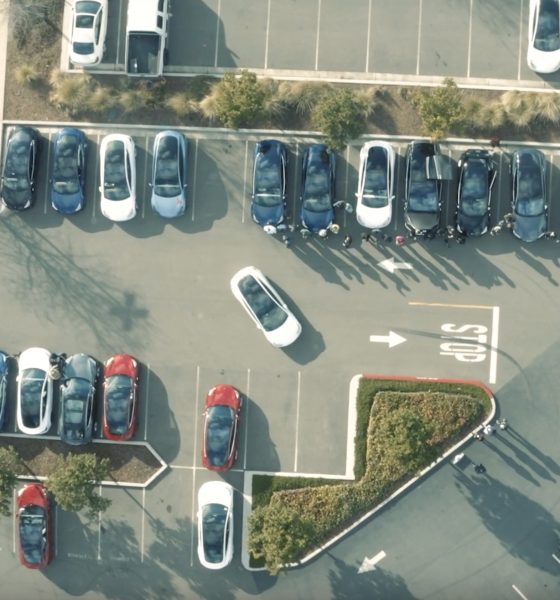
Club member Arash Malek, who goes by the handle @minimalduck on Twitter, gathered fellow members and came up with the idea of a ‘group Smart Summon’ with their Model 3s as a showcase of how Tesla’s latest autonomous vehicle retrieval feature works in a real-world scenario.
“The Smart Summon went very well and the cars did not stop as much as some had anticipated. The technology feels like it has come a long way since its initial release. Afterward, a lot more members felt encouraged and better about the technology,” Tesla Owners Club of Silicon Valley founder and president John Stringer tells Teslarati.
Got @tesla’s for days. So much demand in one spot. Love this community. Thankful to @elonmusk @tesla for creating this. pic.twitter.com/gyPwPzEB0r
— Tesla Owners Silicon Valley (@teslaownersSV) January 26, 2020
“To be able to summon your car to yourself is one step closer to autonomous driving. At some point, your car will be able to come to you no matter where you are and no matter what floor you are on. It will be a normal thing to see a car without someone in it,” added Stringer.
Smart Summon is available to customers who purchased Full Self-Driving Capability or Enhanced Autopilot. With this feature, one can enable their Teslas to go to them or to a destination of choice from a parking spot that’s within their line of sight. It is a pretty handy and convenient feature for those who might be coming out of grocery stores, those dealing with a fussy child, or for those who opt not to walk to the parking lot for whatever reason.
In the future, what members of the Tesla Owners Club of Silicon Valley did over the weekend can be applied to autonomous valet services at hotels, airports, or other venues where such technology can be used. It is an initial step to how Tesla’s future Robotaxi service would operate in the future. Passenger can be given temporary access codes to Summon a vehicle to pick them up for a ride or perhaps valet services will have a dispatch system to deliver rides to waiting customers.
Tesla owners can only expect the Elon Musk-led electric carmaker to further improve the Smart Summon feature overtime. A Tesla Model 3 owner subjected their vehicle to an obstacle course and saw results that made them believe that Tesla is on its way to perfecting the technology for self-driving cars. With the confidence that it can also perform well outside the United States where road markings and signs may be different, Tesla expanded its release of Smart Summon to other markets including China.
Check out the drone video from @MinimalDuck, capturing fellow Tesla Owners of Silicon Valley club members Smart Summoning their Model 3s together.


Elon Musk
The Boring Company clears final Nashville hurdle: Music City loop is full speed ahead
The Boring Company has cleared its final Nashville hurdles, putting the Music City Loop on track for 2026.

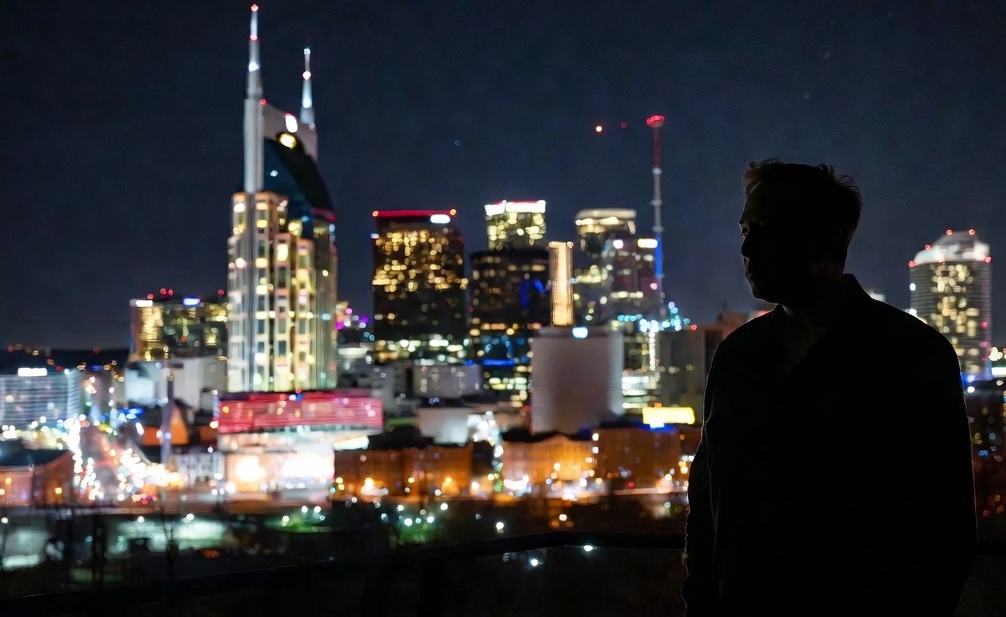
The Boring Company has cleared one of its most significant regulatory milestones yet, securing a key easement from the Music City Center in Nashville just days ago, the latest in a series of approvals that have pushed the Music City Loop project firmly into construction reality.
On March 24, 2026, the Convention Center Authority voted to grant The Boring Company access to an easement along the west side of the Music City Center property, allowing tunneling beneath the privately owned venue. The move follows a unanimous 7-0 vote by the Metro Nashville Airport Authority on February 18, and a joint state and federal approval from the Tennessee Department of Transportation and the Federal Highway Administration on February 25. Together, these green lights have cleared the path for a roughly 10-mile underground tunnel connecting downtown Nashville to Nashville International Airport, with potential extensions into midtown along West End Avenue.
Music City Loop could highlight The Boring Company’s real disruption
Nashville was selected by The Boring Company largely because of its rapid population growth and the strain that growth has placed on surface infrastructure. Traffic has become a persistent problem for residents, convention visitors, and airport travelers alike. The Music City Loop promises an approximately 8-minute underground transit time between downtown and the Nashville International Airport (BNA), removing thousands of vehicles from surface roads daily while operating as a fully electric, zero-emissions system at no cost to taxpayers.
The project fits squarely within a broader vision Musk has championed for years. In responding to a breakdown of the Loop’s construction costs, Musk posted on X: “Tunnels are so underrated.” The comment reflected a longstanding belief that underground transit represents one of the most cost-effective and scalable infrastructure solutions available. The Boring Company has claimed it can build 13 miles of twin tunnels in Nashville for between $240 million and $300 million total, a fraction of what comparable projects cost elsewhere in the country.
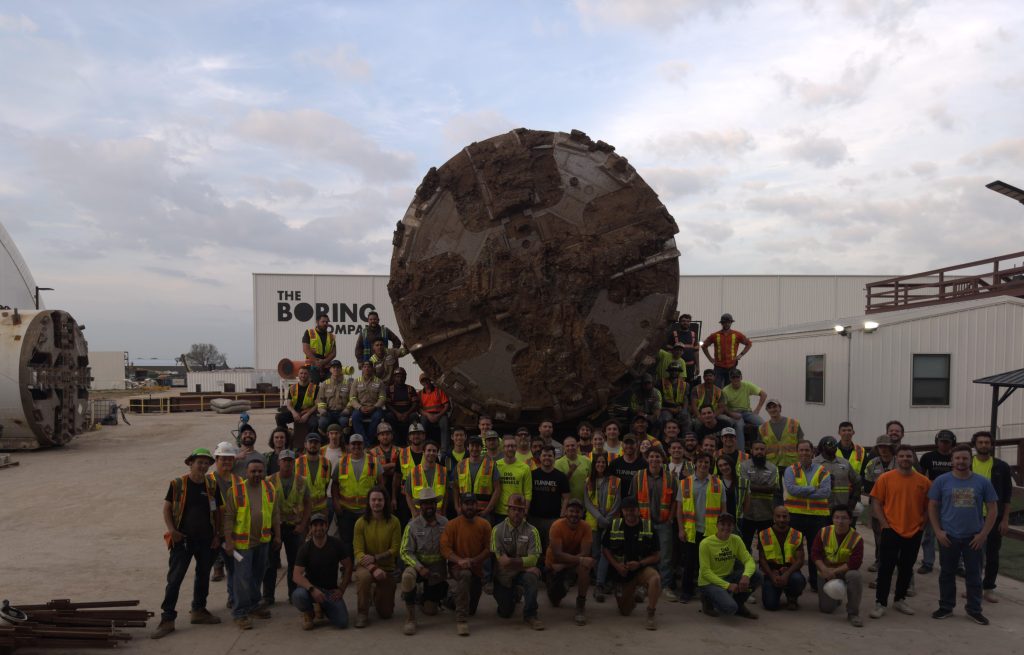
Image Credit: The Boring Company/Twitter
The Las Vegas Loop, The Boring Company’s first operational system, has served as a proof of concept. During the CONEXPO trade show in March 2026, the Vegas Loop transported approximately 82,000 passengers over five days at the Las Vegas Convention Center, demonstrating the system’s capacity during large-scale events. Nashville draws millions of convention visitors and tourists each year, and local business leaders have pointed to that same capacity as a major draw for supporting the project.
The Music City Loop was first announced in July 2025. Construction began within hours of the February 25 state approval, with The Boring Company’s Prufrock tunneling machine already in the ground the same evening. The first operational segment is targeted for late 2026, with the full route expected to be complete by 2029. The project represents one of the largest privately funded infrastructure efforts currently underway in the United States.
Elon Musk
Elon Musk’s $10 Trillion robot: Inside Tesla’s push to mass produce Optimus
Tesla’s surging Optimus job listings reveal a company sprinting from prototype to one million robot production.
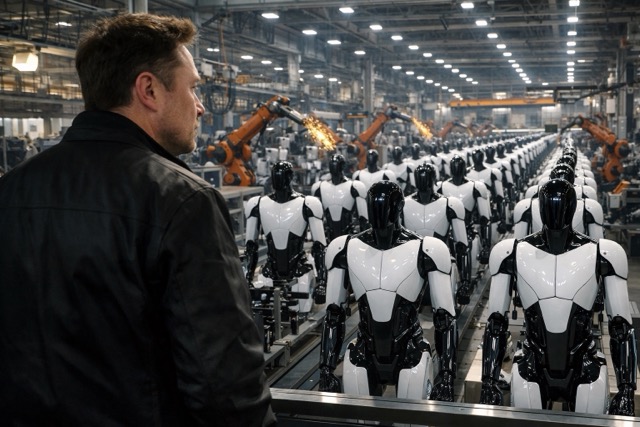
Tesla is accelerating its push to bring the Optimus humanoid robot to high volume production, and its recent job listings tells the story as clearly as any earnings call.
With well over 100 Optimus related job openings now posted across its U.S. facilities, Tesla is signaling a critical pivot for the program, moving it from a captivating tech demo to a serious manufacturing endeavor. Roles span the full spectrum of the product lifecycle, from Robotics Software Engineers and Manufacturing Engineers to Mechanical Integration Engineers and AI Engineers focused on world modeling and video generation. One active listing for a Software Engineer on the Optimus team asks candidates to build scalable and reliable data pipelines for Optimus manufacturing lines and develop automation tools that accelerate analysis and visualization for mass manufacturing.
Tesla is racing toward a one million unit annual production target. The clearest signal yet that Tesla is treating Optimus as its primary business came on January 28, 2026, during the company’s Q4 2025 earnings call. Musk announced that Tesla is ending production of the Model S and Model X, and will repurpose those lines at its Fremont, California factory to build Optimus humanoid robots.
A production intent prototype of Optimus Version 3 is planned to be ready in early 2026, after which Tesla intends to build a one million unit production line with a targeted production start by the end of 2026. To support that ramp, Tesla broke ground on a massive new Optimus manufacturing facility at Gigafactory Texas in late 2025, with ambitions to eventually reach 10 million units per year.
Tesla Giga Texas to feature massive Optimus V4 production line
The business case for scaling this aggressively is rooted in labor economics. Musk has stated that “Optimus has the potential to be the biggest product of all time,” reasoning that if Tesla can produce capable humanoid robots at scale and reasonable cost, every task currently performed by human labor becomes a potential application. In a separate statement, Musk framed Optimus’s long term importance even more bluntly, saying it could surpass Tesla’s vehicle business in scale with the potential to generate $10 trillion in revenue.
The industries Tesla is targeting first are those most burdened by repetitive physical labor. Early applications include manufacturing assembly, material handling and quality inspection, as well as logistics tasks like loading, unloading, sorting, and transporting goods in warehouses and distribution centers. Longer term, Tesla’s vision is for Optimus to penetrate household, medical, and logistics scenarios at the scale of a smartphone rollout.
Elon Musk
Elon Musk’s Boring Co. Tunnel Vision Challenge ends with a surprise for Louisiana, Maryland and Dallas
The Boring Company stunned three cities today, awarding New Orleans, Baltimore, and Dallas free underground Loop tunnels.
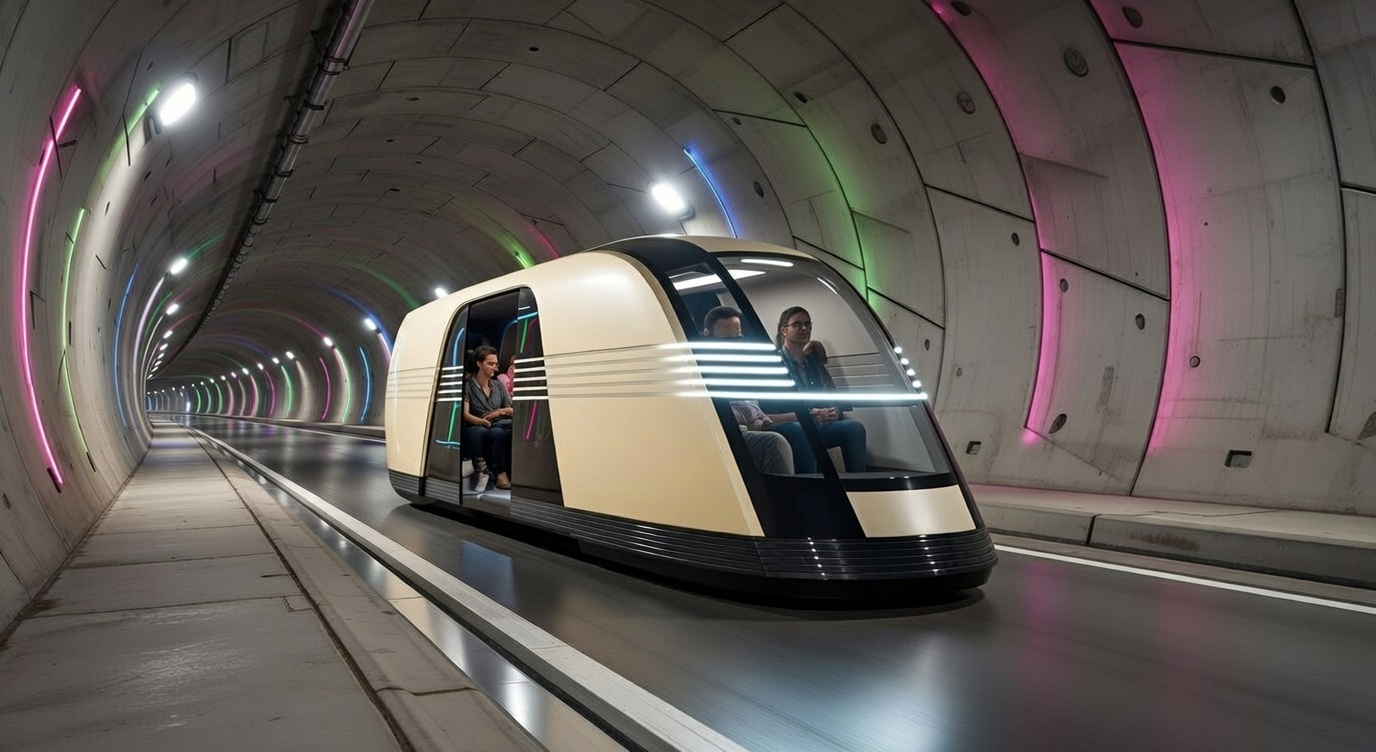
Elon Musk’s The Boring Company (TBC) announced today that it is building free underground Loop tunnels in three American cities: New Orleans, Louisiana; Baltimore, Maryland; and Dallas, Texas. The company had promised one winner when it launched the Tunnel Vision Challenge in January. After receiving 487 submissions, it selected three, committing to fund and construct all of them pending a feasibility review, entirely at its own expense. For a company that has faced years of skepticism over the gap between its promises and its delivered projects, choosing to expand its commitment rather than narrow it is a notable shift in both scale and accountability.
All three projects will now enter a rigorous, fully funded diligence phase that includes meetings with elected officials, regulators, community and business leaders, geotechnical borings, and a complete investigation of subsurface utilities and infrastructure. TBC confirmed that all costs associated with this diligence process are 100% funded by the company. If all three projects pass feasibility, all three get built. If only one clears the bar, that one gets built. The company’s willingness to fund the due diligence regardless of outcome removes one of the most common early-stage barriers that kills promising infrastructure proposals before they leave a spreadsheet.
Beyond the three winners, TBC announced it will continue working with two additional entrants it found compelling enough to pursue independently: the Hendersonville Utility Tunnel in Hendersonville, Tennessee, and the Morgan’s Wonderland Tunnel in San Antonio, Texas, which would notably serve one of the nation’s premier theme parks built specifically for guests with special needs.
The challenge also coincides with TBC’s most active construction period to date. The company recently began drilling on the Music City Loop near the Tennessee State Capitol in Nashville, and in February it broke ground on a Loop in Dubai. Musk has long argued that the fundamental problem with urban infrastructure is cost and bureaucratic inertia, not engineering. “The key to solving traffic is making going 3D either up or down,” he said in 2018, a conviction now reflected in a company structure built to absorb the financial risk that typically stalls public projects for years.
Music City Loop could highlight The Boring Company’s real disruption
The Tunnel Vision Challenge’s most underappreciated element may be what it produced beyond three winners. Submissions came from individuals, companies, and governments across states including Alaska, Arkansas, Colorado, Kansas, Louisiana, Maryland, New York, and Texas, as well as from international entrants. Musk captured the underlying logic years ago when he said, “Traffic is driving me nuts. I’m going to build a tunnel boring machine and just start digging.” Today, three American cities are counting on exactly that.
Tunnel Vision Challenge results!
We’ve been overwhelmed with the amazing submissions…so we are announcing three winners!
The Thrilling Three are:
– NOLA Loop (New Orleans, LA)
– Ravens Loop (Baltimore, MD)
– University Hills Loop (Dallas, TX)What happens next? TBC and the… https://t.co/cY2ULftfiK
— The Boring Company (@boringcompany) March 24, 2026

Tesla FSD mocks BMW human driver: Saves pedestrian from near miss

Tesla Robotaxi gets a small but significant change

Tesla makes latest announcement on Model S and Model X

Elon Musk says Tesla is developing a new vehicle: ‘Way cooler than a minivan’

Elon Musk launches TERAFAB: The $25B Tesla-SpaceXAI chip factory that will rewire the AI industry


