Featured
Tesla lands on Fortune’s 2026 Most Innovative Companies and the Cybercab is why
Fortune names Tesla one of America’s most innovative companies as Cybercab production officially begins in 2026.

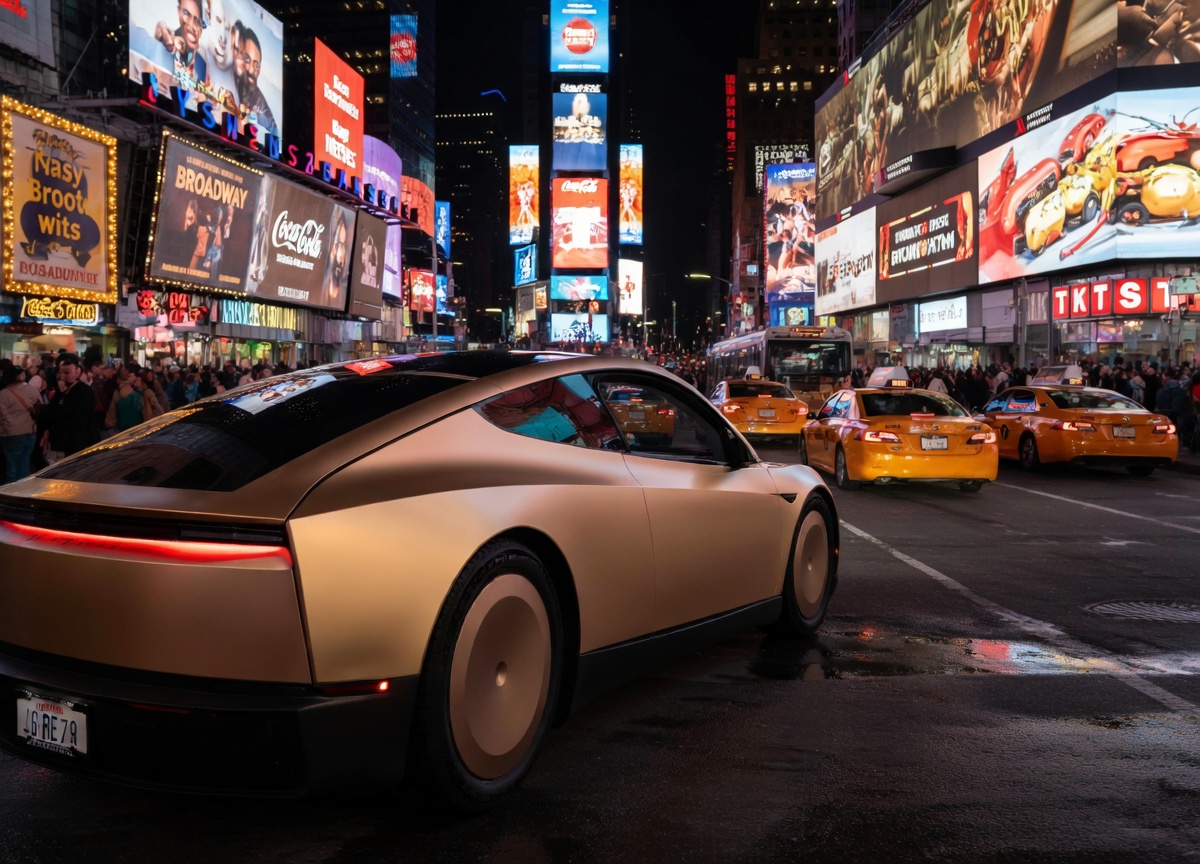
Fortune has named Tesla to its America’s Most Innovative Companies 2026 list, and the timing could not carry more weight. With Cybercab production ramping at Gigafactory Texas and a driverless Robotaxi service expanding to key cities in the US, Tesla’s inclusion is a direct reflection of the future of innovation happening right now.
Fortune’s list, produced annually in partnership with Statista, evaluates 300 companies across three dimensions: product innovation, process innovation, and innovation culture. This year’s cohort of 300 generated over $12.5 trillion in combined revenue, and Tesla’s entry places it alongside Rivian, which made the list for the first time. Tesla edges out Rivian on the strength of a product pipeline that is meaningfully further along. Where Rivian has introduced a self-driving AI model, Tesla has logged over 8 billion miles on its Full Self Driving tech, logged more than 250,000 miles of unsupervised Robotaxi service in Austin, and rolled the first production Cybercab off the line at Gigafactory Texas in February 2026.
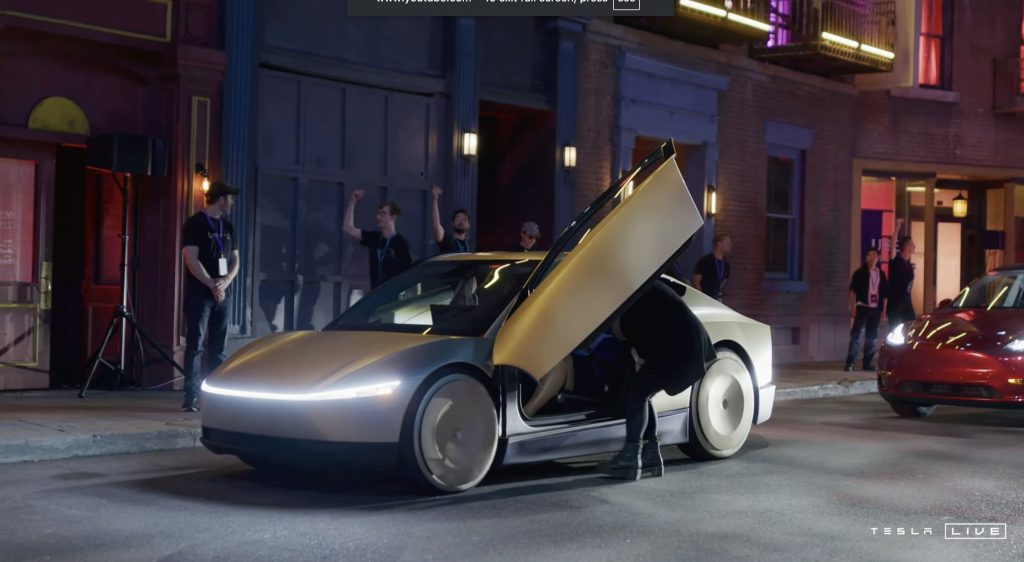
Credit: Tesla
The Cybercab is the product that defines Tesla’s case for innovation. It has no steering wheel, no pedals, and is designed to be produced at a cycle time of one vehicle every ten seconds using a revolutionary unboxed manufacturing process. Elon Musk, speaking at Tesla’s 2025 Annual Shareholder Meeting, described it plainly: “Manufacturing for the Cybercab is closer to a high-volume consumer electronics device than a car manufacturing line.” That ambition is unprecedented in the automotive industry. Musk also acknowledged the ramp will be deliberate: “Almost everything is new, so the early production rate will be agonizingly slow, but eventually end up being insanely fast.”
🎥: Our FULL first ride in the @Tesla Cybercab pic.twitter.com/6gR7OgKRCz
— TESLARATI (@Teslarati) October 11, 2024
Historically, Tesla’s recognition on lists like this has tracked with its product breakthroughs. The company changed the auto industry’s trajectory when it proved electric vehicles could be desirable, then again when it scaled Gigafactory production, and again when FSD began logging real safety data at scale. The Cybercab represents the next inflection point, a purpose-built autonomous vehicle priced below $30,000 that is designed to operate in a networked Robotaxi fleet expanding from Austin to Miami, Dallas, Phoenix, and Las Vegas.
Fortune’s recognition arrives as Tesla is navigating one of its most consequential years. Mass production begins in April 2026. Regulatory approvals are progressing alongside deployment data. Rivals are watching closely.
Here is a look at the top companies on Fortune’s 2026 list, led by Alphabet for the fourth straight year:
- 1. Alphabet — AI leadership across Search, DeepMind, and Waymo; dominant patent portfolio and innovation culture
- 2. Microsoft — Azure AI, Copilot integration across enterprise software, and OpenAI partnership
- 3. Apple — iPhone ecosystem innovation, Apple Silicon, and Vision Pro spatial computing platform
- 4. Abbott — medical device breakthroughs including continuous glucose monitors and cardiac diagnostics
- 5. KLA — semiconductor process control enabling AI chip production at scale; newcomer to the top 5
- 6–20. Additional confirmed inclusions: Tesla, Harness (No. 24), Rivian, Cognizant, PPG, DXC Technology, and Advanced Technology Services, among 98 first-time entrants. The complete ranked list is available at fortune.com (behind a paywall)


Elon Musk
Tesla FSD mocks BMW human driver: Saves pedestrian from near miss
Tesla FSD anticipated a BMW driver’s lane drift before the human behind the wheel could react.
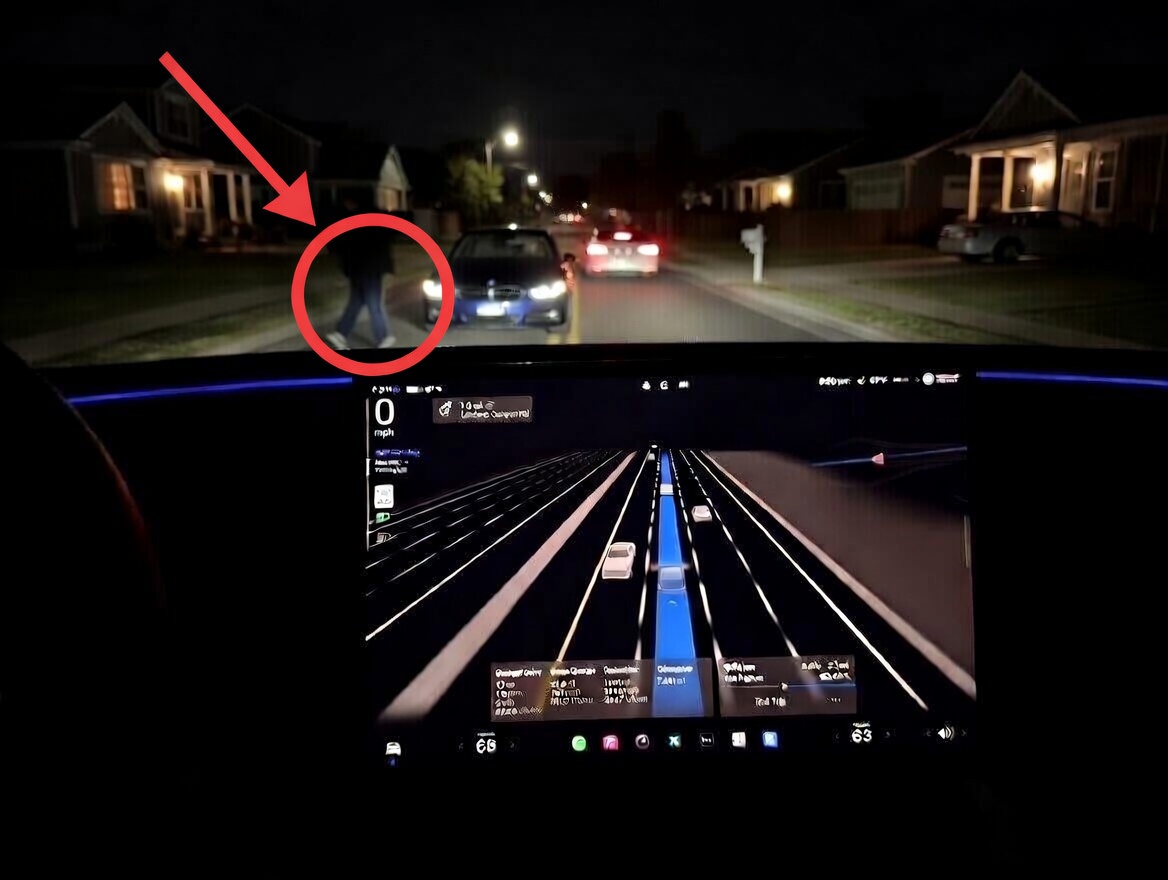
A video posted to r/TeslaFSD this week put a sharp spotlight on Tesla’s Full Self-Driving (FSD) software being able to react to pedestrian intent than an actual human driver behind the wheel. In the Reddit clip, a BMW driver can be seen rolling through a neighborhood street completely unaware of a pedestrian stepping in to cross. At the same time, a Tesla driving on FSD had already begun slowing down before the pedestrian even began their attempt to cross the street The BMW kept moving, prompting the pedestrian to hop back, while the Tesla came to a stop and provide right-of-way for the human to safely cross.
That gap between what the BMW driver saw and what FSD had already processed is the story. Tesla FSD wasn’t reacting to a person in the street, rather it was reading the signals that a person was about to enter it based on the pedestrian’s movement, trajectory, and their trajectory to telegraph intent.
Tesla’s FSD is now built on an end-to-end neural network trained on billions of real-world miles, learning to interpret subtle human behavioral cues the same way an experienced human driver does instinctively. The difference is consistency. A human driver distracted for two seconds misses what FSD does not.
Tesla sues California DMV over Autopilot and FSD advertising ruling
Reddit commenters in the thread were blunt about the BMW driver’s failure, with several pointing out that the pedestrian was visible well before the crossing. One response put it plainly that the car on FSD saw the situation developing before the human in the other car had registered there was a situation at all.
Tesla has published data showing FSD (Supervised) is 54% safer than a human driver, accumulated across billions of miles driven on the system. Elon Musk has said FSD v14 will outperform human drivers by a factor of two to three, and that v15 has “a shot” at a 10x improvement. Pedestrian safety is where the stakes are highest, and where intent prediction closes the gap fastest. At 30 mph, a car covers roughly 44 feet per second. An extra second of awareness from reading a person’s body language rather than waiting for them to step out is often the difference between a near miss and a fatality.
Video and community discussion: r/TeslaFSD on Reddit
FSD saves man from becoming a pancake. BMW driver nearly flattens him.
by
u/Qwertygolol in
TeslaFSD

Tesla FSD mocks BMW human driver: Saves pedestrian from near miss

Tesla Robotaxi gets a small but significant change

Tesla makes latest announcement on Model S and Model X

Elon Musk says Tesla is developing a new vehicle: ‘Way cooler than a minivan’

Elon Musk launches TERAFAB: The $25B Tesla-SpaceXAI chip factory that will rewire the AI industry


