Lifestyle
Review: Choosing a Portable Bluetooth Speaker

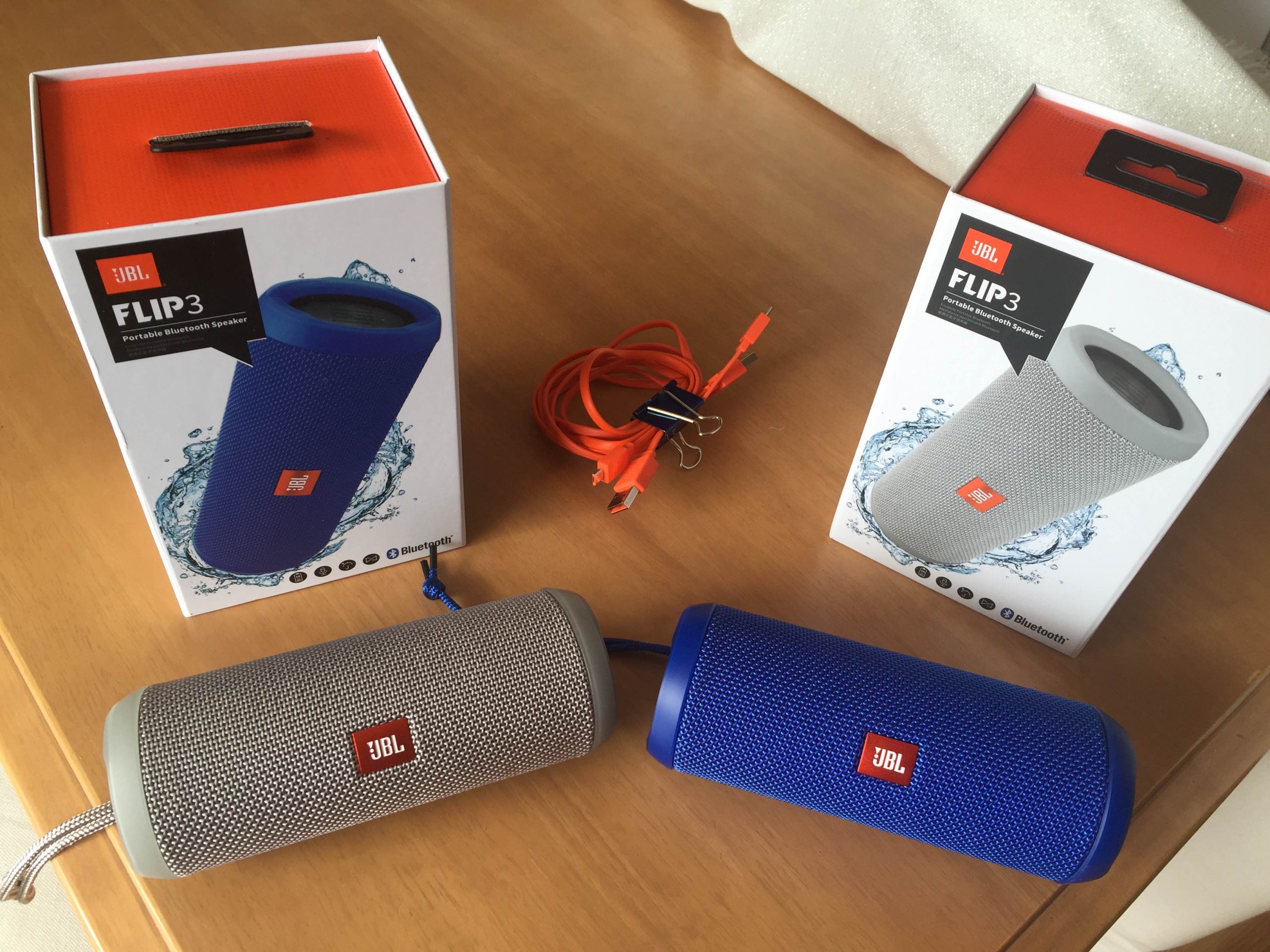
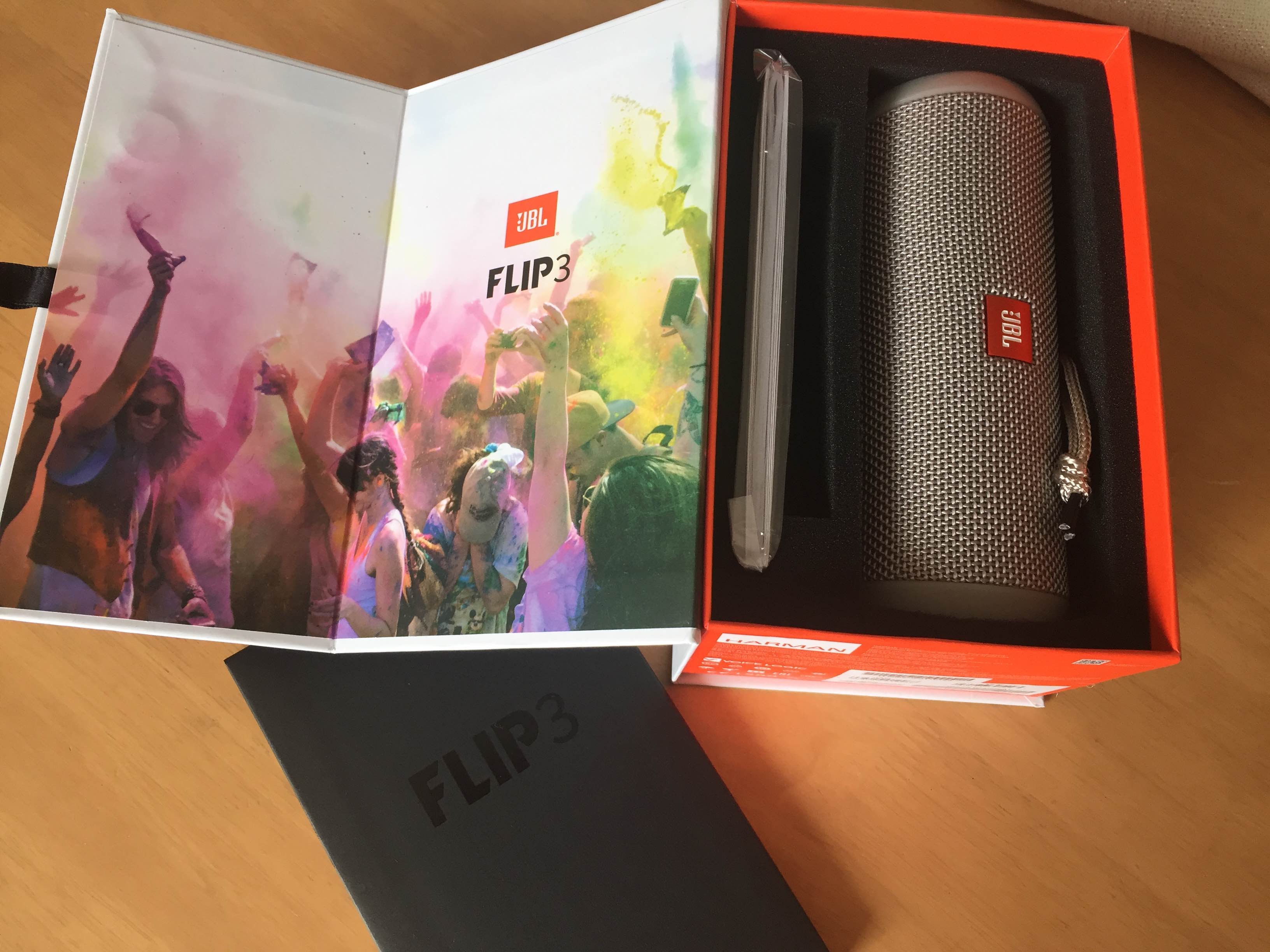
JBL Flip 3 Portable Bluetooth Speaker
These days, everyone seems to have a portable Bluetooth speaker at home. Since Christmas, my father-in-law has been one of those people. It sits nicely on top of the wooden and glass enclosure for the 30+ year old stereo system he will never part with. Considering that we purchased it for him to pair with the iPad we forced upon he and mom last Christmas, my husband and I started to wonder why we didn’t have one ourselves. We already own a not-so-portable computer speaker set that we lug back and forth outside during pool season and a cute but poor quality floating speaker from Brookstone, which is nearly unusable in our pool. Those things in mind, I debated the need for another speaker but was really drawn to the ease of use and quality of the speaker we purchased for Dad. It is made by Best Buy’s own Insignia brand and was purchased on sale for $25. It is easy enough for my self-proclaimed tech unsavvy in-laws to use.
Decisions, Decisions
As is the modern world we live in, both my husband and I started comparison shopping online. The options were staggering. You can spend $15 on a small clip or $400 on a big name device. Then came the features. Some can charge your mobile device while others can be linked to a partner speaker for surround sound. Some are water proof, others shock and drop proof. Ideally, you should know which features you desire before you dive into comparing the dizzying amount of options. The Insignia speaker we had purchased for dad came with the ability to act as a power bank to charge a mobile device. Ultimately, we decided that was nifty but not a requirement. Similarly, have a price range in mind. Not having one is what made our choice so hard, since it didn’t narrow down anything. We had been willing to pay more if something really impressed us.
After some back and forth we thought hard about where and how we would use this speaker. For general use in the house, almost any option would do so we set out to our local Best Buy to have a listen. This small $40 jam plus speaker packed in generous volume. Bose and Beats options both proved to have unsurprising and undeniable sound quality, but we got the feeling early on that a good portion of their high price tag was related to the brand name. The Harman Kardon Esquire Mini was practically a fashion statement in its metallic casing, as were the various Kate Spade speakers that come with their own purse-like carrying case. The UE Boom 2 seemed like the speaker to beat for what ultimately ended up as our preference: A medium sized, portable but loud speaker with a price point somewhere in the middle of the pack. Something about the look of this speaker bothered me, so I was noncommittal. My husband already knew he wanted to hear the JBL Flip 3 but was disappointed to find that Best Buy did not have it on display. That being said, our mission to listen to all possible options to buy the speaker that offered the best combination of price and sound hadn’t been a full success. We walked out of Best Buy empty handed but knowing at least that we ruled out some speakers on the highest and lowest end of the price spectrum.
Just Do It
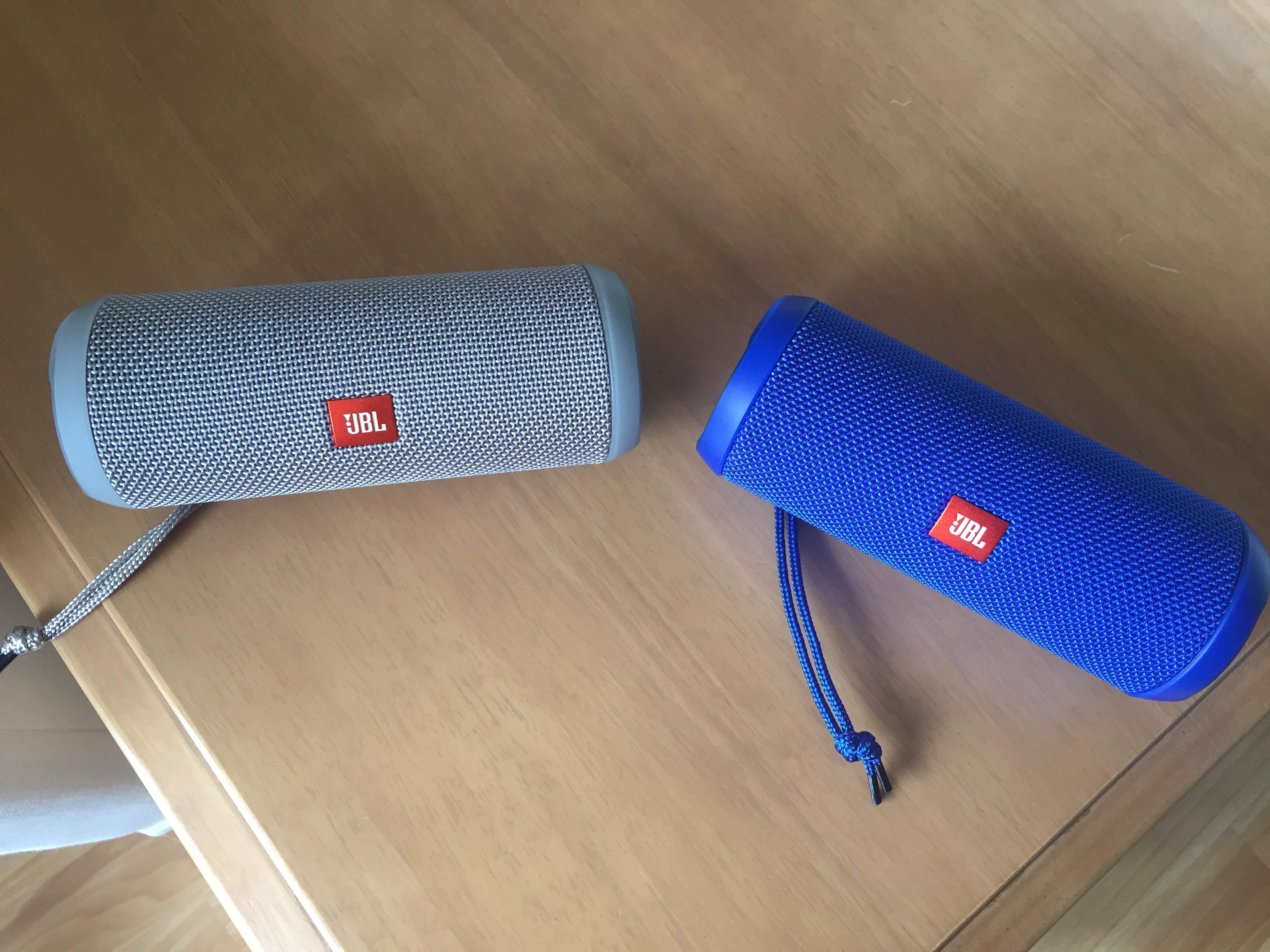
Indecision gets old quickly, especially when you’re seeking to buy a new gadget to play with. After pouring over more reviews and comparisons, it came down to the JBL Flip 3 and the UE Boom. The latter option costs nearly double but is water, dirt and shock proof. It clams a 15 hour battery life compared to the Flip 3’s 10 hour life. Again I went back to the look of the thing (how the buttons make what looks like a cross) and how much this speaker was worth to me. We both decided that for $100 cheaper, the JBL Flip 3 was our winner. We purchased it on Amazon, sound unheard, and hoped for the best.
Double Time
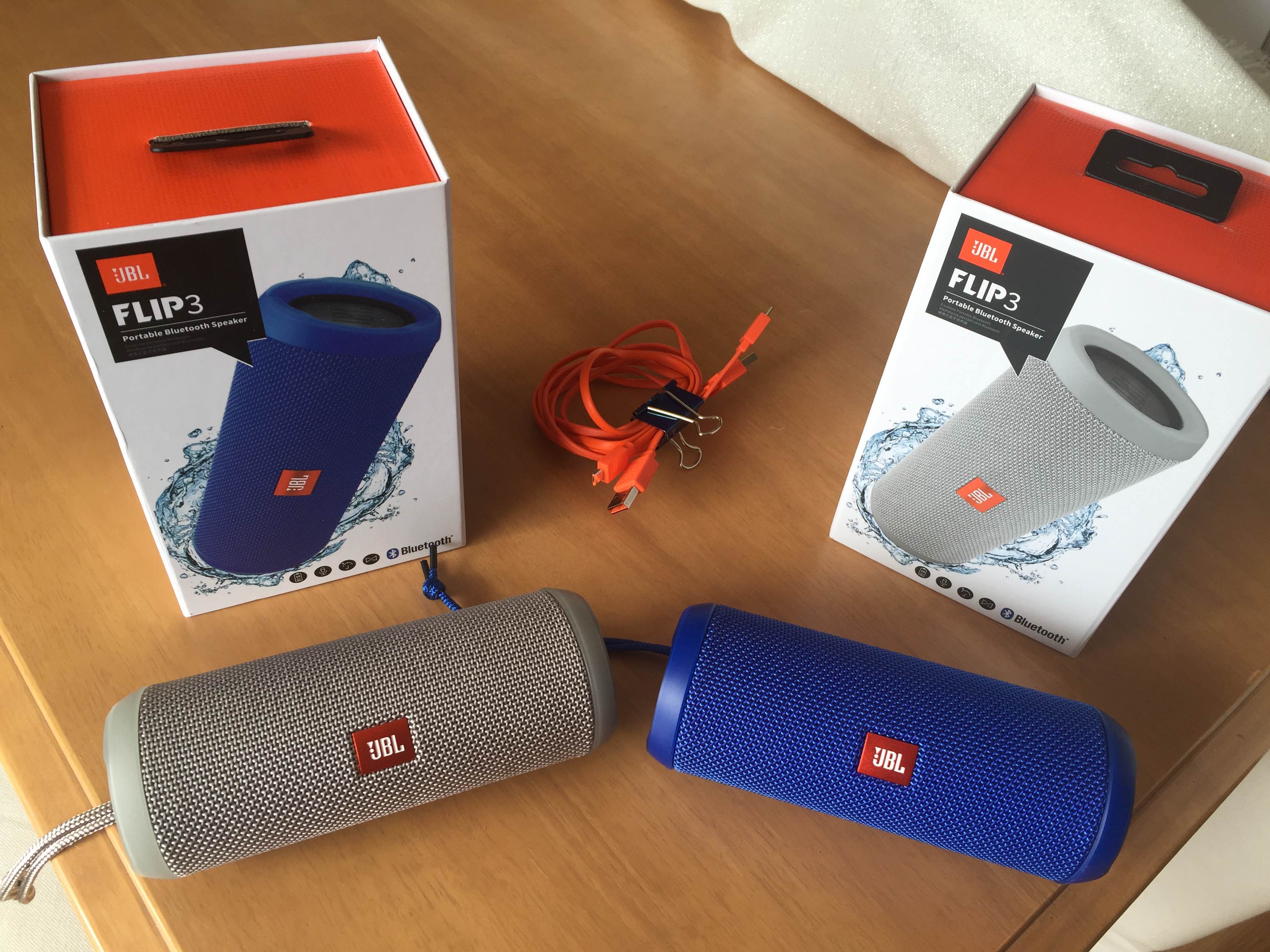
Long story short, it only took a matter of days for us to order a second speaker. The JBL Up 3 sounded great and offered the ability to connect two speakers to one source, providing multi-room or surround sound use. Since we were to be having a party soon that we knew would bring guests to both the main floor and basement, the decision was quick.
Set up and Use
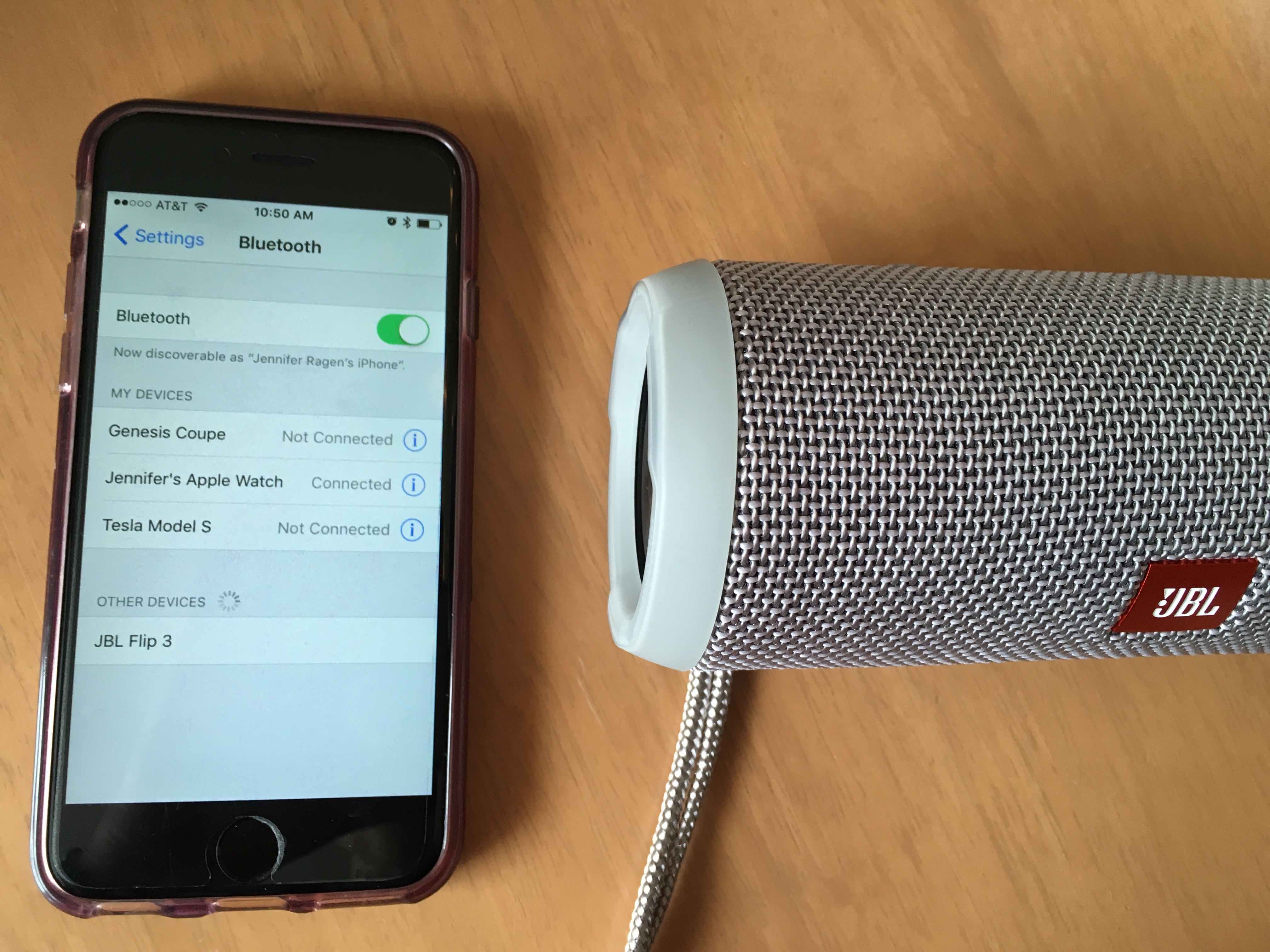
Like most other bluetooth devices on the market, pairing the speaker to an iPhone or iPad was easy and only took a few moments. I did not need to read any instructions. Simply turn on the speaker and navigate to your device’s Bluetooth screen. Press the bluetooth button on the speaker (noted by its symbol) to make it discoverable and watch it pop up on your screen. Press it and within 15 seconds, you’ll hear a pleasant chime on the speaker to let you know it worked. The speaker comes with a generously long charge cable and a series of 5 small lights show you your charge level, so you should be able to start use right out of the box or after a very short charge.
Features
This speaker has some of the common features we saw when comparison shopping. It can be used as microphone for calls, can be paired with another speaker and is splash proof. Using it for calls sounded appealing for the thought of my husband taking a conference call on the rare days he works from home but it wasn’t a required feature. A note of caution for phone pairing – the speaker will play your other sounds. I quickly learned that listening to music from my iPhone meant interruptions for the sound of my typing clicks or unlock sound. I also inadvertently hijacked the sound with a quick social media scroll that led me to a video. Being at least splash proof was important to us. We plan on using it outside near our pool and while we don’t run much a risk of the speaker being submerged, we envision using the controls with wet hands or walking near it with wet legs.
Sound
One part of this speaker that I like it its funky sounds it makes to let you know it’s turned on or off.
But that’s not what’s important. What you really need to know is how it sounds. Keep in mind our ears probably hear it better than the iPhone I used to take this video and the air in our home transmits better than whatever you are using to listen right now. That being said, I’m still pretty impressed at even the sound in this video.

The Starting Line. “Anyways.” 2016
I’ve found the sound to be clear and generously loud no matter what type of music is playing. I’m no pro and those out there who are may beg to differ but for a $100 portable bluetooth speaker for casual in-home use, the JBL Flip 3 is a winner.
Verdict
This is a recommended buy for a solid portable Bluetooth speaker with a moderate price. It is missing a few features compared to competitors but provides an excellent overall value.


Elon Musk
The Boring Company clears final Nashville hurdle: Music City loop is full speed ahead
The Boring Company has cleared its final Nashville hurdles, putting the Music City Loop on track for 2026.

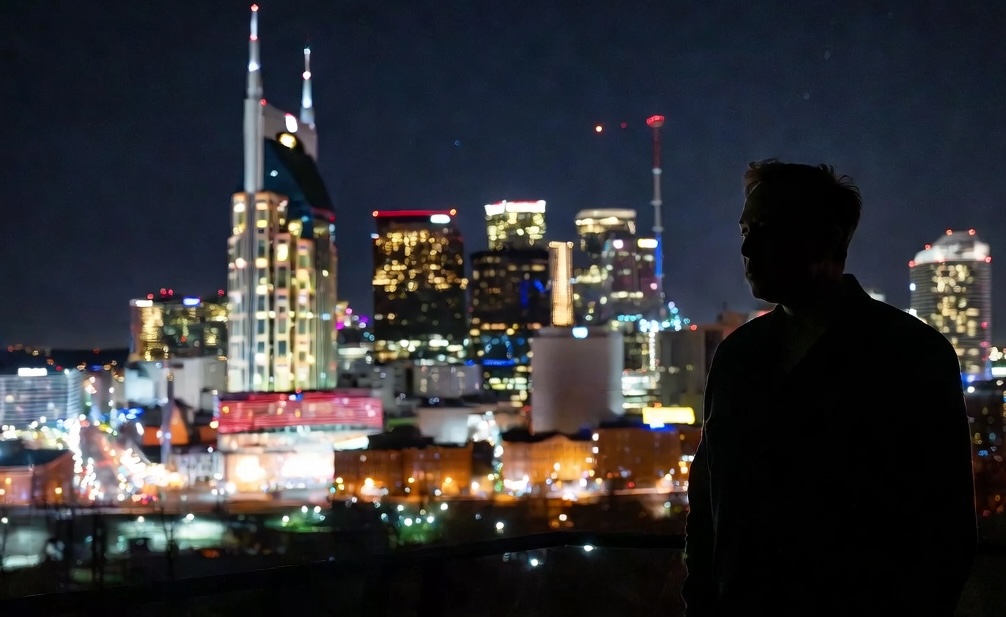
The Boring Company has cleared one of its most significant regulatory milestones yet, securing a key easement from the Music City Center in Nashville just days ago, the latest in a series of approvals that have pushed the Music City Loop project firmly into construction reality.
On March 24, 2026, the Convention Center Authority voted to grant The Boring Company access to an easement along the west side of the Music City Center property, allowing tunneling beneath the privately owned venue. The move follows a unanimous 7-0 vote by the Metro Nashville Airport Authority on February 18, and a joint state and federal approval from the Tennessee Department of Transportation and the Federal Highway Administration on February 25. Together, these green lights have cleared the path for a roughly 10-mile underground tunnel connecting downtown Nashville to Nashville International Airport, with potential extensions into midtown along West End Avenue.
Music City Loop could highlight The Boring Company’s real disruption
Nashville was selected by The Boring Company largely because of its rapid population growth and the strain that growth has placed on surface infrastructure. Traffic has become a persistent problem for residents, convention visitors, and airport travelers alike. The Music City Loop promises an approximately 8-minute underground transit time between downtown and the Nashville International Airport (BNA), removing thousands of vehicles from surface roads daily while operating as a fully electric, zero-emissions system at no cost to taxpayers.
The project fits squarely within a broader vision Musk has championed for years. In responding to a breakdown of the Loop’s construction costs, Musk posted on X: “Tunnels are so underrated.” The comment reflected a longstanding belief that underground transit represents one of the most cost-effective and scalable infrastructure solutions available. The Boring Company has claimed it can build 13 miles of twin tunnels in Nashville for between $240 million and $300 million total, a fraction of what comparable projects cost elsewhere in the country.
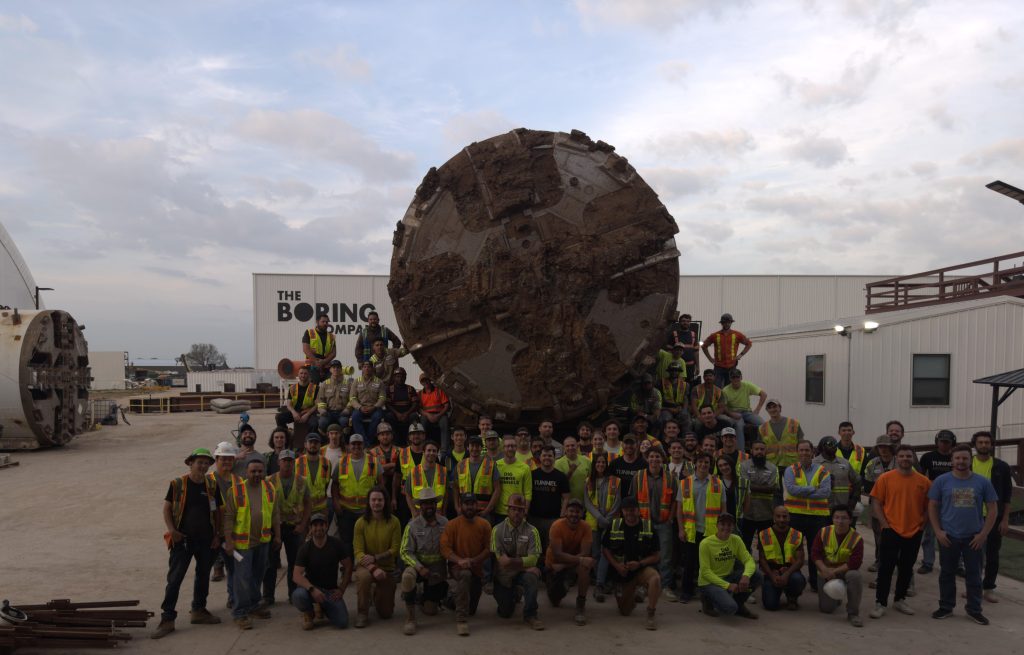
Image Credit: The Boring Company/Twitter
The Las Vegas Loop, The Boring Company’s first operational system, has served as a proof of concept. During the CONEXPO trade show in March 2026, the Vegas Loop transported approximately 82,000 passengers over five days at the Las Vegas Convention Center, demonstrating the system’s capacity during large-scale events. Nashville draws millions of convention visitors and tourists each year, and local business leaders have pointed to that same capacity as a major draw for supporting the project.
The Music City Loop was first announced in July 2025. Construction began within hours of the February 25 state approval, with The Boring Company’s Prufrock tunneling machine already in the ground the same evening. The first operational segment is targeted for late 2026, with the full route expected to be complete by 2029. The project represents one of the largest privately funded infrastructure efforts currently underway in the United States.
Elon Musk
Elon Musk’s $10 Trillion robot: Inside Tesla’s push to mass produce Optimus
Tesla’s surging Optimus job listings reveal a company sprinting from prototype to one million robot production.
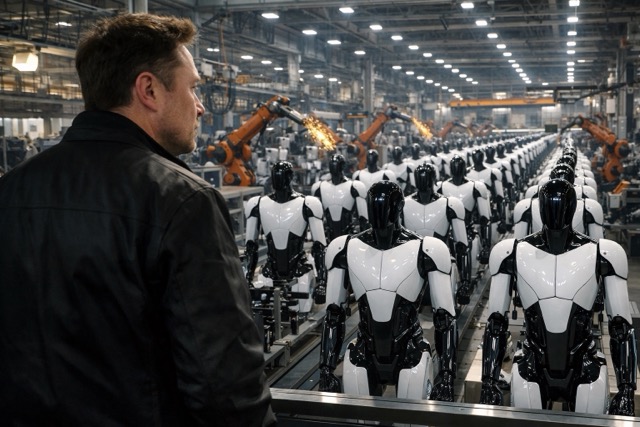
Tesla is accelerating its push to bring the Optimus humanoid robot to high volume production, and its recent job listings tells the story as clearly as any earnings call.
With well over 100 Optimus related job openings now posted across its U.S. facilities, Tesla is signaling a critical pivot for the program, moving it from a captivating tech demo to a serious manufacturing endeavor. Roles span the full spectrum of the product lifecycle, from Robotics Software Engineers and Manufacturing Engineers to Mechanical Integration Engineers and AI Engineers focused on world modeling and video generation. One active listing for a Software Engineer on the Optimus team asks candidates to build scalable and reliable data pipelines for Optimus manufacturing lines and develop automation tools that accelerate analysis and visualization for mass manufacturing.
Tesla is racing toward a one million unit annual production target. The clearest signal yet that Tesla is treating Optimus as its primary business came on January 28, 2026, during the company’s Q4 2025 earnings call. Musk announced that Tesla is ending production of the Model S and Model X, and will repurpose those lines at its Fremont, California factory to build Optimus humanoid robots.
A production intent prototype of Optimus Version 3 is planned to be ready in early 2026, after which Tesla intends to build a one million unit production line with a targeted production start by the end of 2026. To support that ramp, Tesla broke ground on a massive new Optimus manufacturing facility at Gigafactory Texas in late 2025, with ambitions to eventually reach 10 million units per year.
Tesla Giga Texas to feature massive Optimus V4 production line
The business case for scaling this aggressively is rooted in labor economics. Musk has stated that “Optimus has the potential to be the biggest product of all time,” reasoning that if Tesla can produce capable humanoid robots at scale and reasonable cost, every task currently performed by human labor becomes a potential application. In a separate statement, Musk framed Optimus’s long term importance even more bluntly, saying it could surpass Tesla’s vehicle business in scale with the potential to generate $10 trillion in revenue.
The industries Tesla is targeting first are those most burdened by repetitive physical labor. Early applications include manufacturing assembly, material handling and quality inspection, as well as logistics tasks like loading, unloading, sorting, and transporting goods in warehouses and distribution centers. Longer term, Tesla’s vision is for Optimus to penetrate household, medical, and logistics scenarios at the scale of a smartphone rollout.
Elon Musk
Elon Musk’s Boring Co. Tunnel Vision Challenge ends with a surprise for Louisiana, Maryland and Dallas
The Boring Company stunned three cities today, awarding New Orleans, Baltimore, and Dallas free underground Loop tunnels.
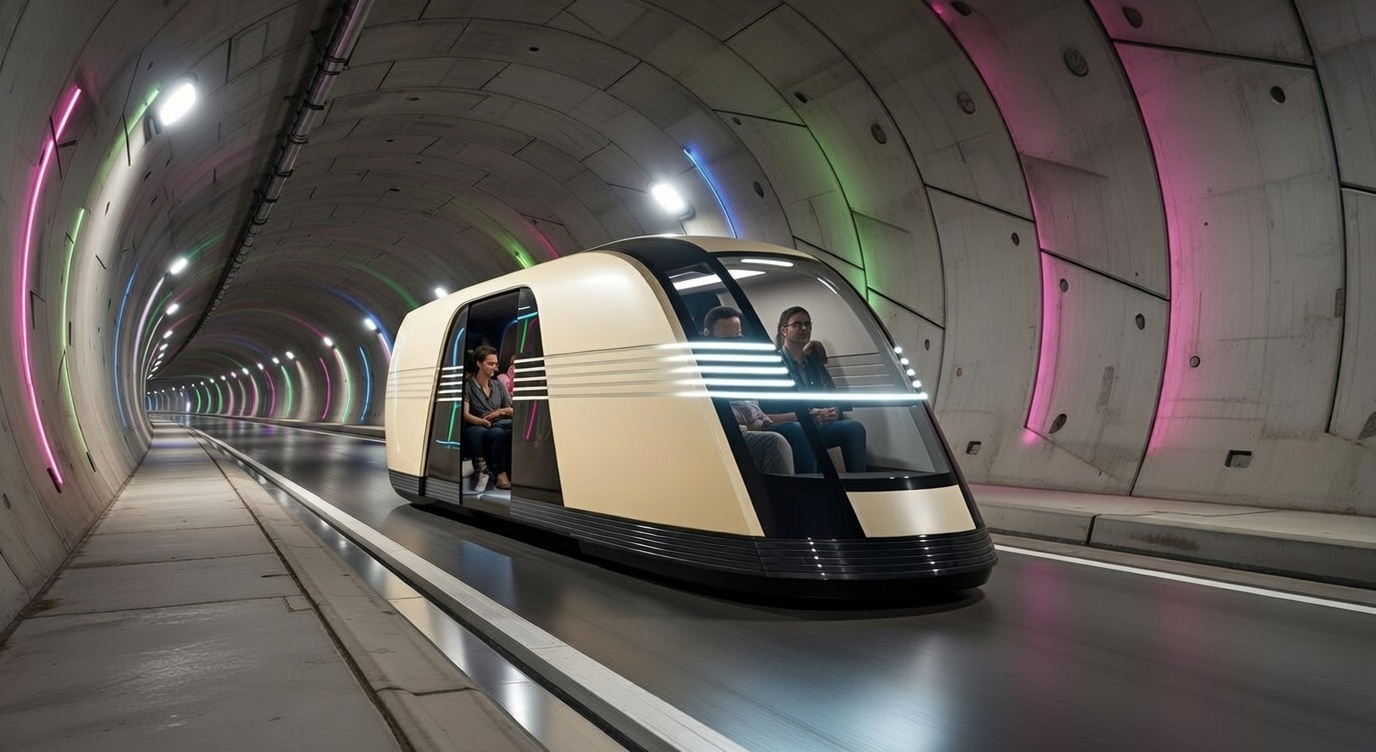
Elon Musk’s The Boring Company (TBC) announced today that it is building free underground Loop tunnels in three American cities: New Orleans, Louisiana; Baltimore, Maryland; and Dallas, Texas. The company had promised one winner when it launched the Tunnel Vision Challenge in January. After receiving 487 submissions, it selected three, committing to fund and construct all of them pending a feasibility review, entirely at its own expense. For a company that has faced years of skepticism over the gap between its promises and its delivered projects, choosing to expand its commitment rather than narrow it is a notable shift in both scale and accountability.
All three projects will now enter a rigorous, fully funded diligence phase that includes meetings with elected officials, regulators, community and business leaders, geotechnical borings, and a complete investigation of subsurface utilities and infrastructure. TBC confirmed that all costs associated with this diligence process are 100% funded by the company. If all three projects pass feasibility, all three get built. If only one clears the bar, that one gets built. The company’s willingness to fund the due diligence regardless of outcome removes one of the most common early-stage barriers that kills promising infrastructure proposals before they leave a spreadsheet.
Beyond the three winners, TBC announced it will continue working with two additional entrants it found compelling enough to pursue independently: the Hendersonville Utility Tunnel in Hendersonville, Tennessee, and the Morgan’s Wonderland Tunnel in San Antonio, Texas, which would notably serve one of the nation’s premier theme parks built specifically for guests with special needs.
The challenge also coincides with TBC’s most active construction period to date. The company recently began drilling on the Music City Loop near the Tennessee State Capitol in Nashville, and in February it broke ground on a Loop in Dubai. Musk has long argued that the fundamental problem with urban infrastructure is cost and bureaucratic inertia, not engineering. “The key to solving traffic is making going 3D either up or down,” he said in 2018, a conviction now reflected in a company structure built to absorb the financial risk that typically stalls public projects for years.
Music City Loop could highlight The Boring Company’s real disruption
The Tunnel Vision Challenge’s most underappreciated element may be what it produced beyond three winners. Submissions came from individuals, companies, and governments across states including Alaska, Arkansas, Colorado, Kansas, Louisiana, Maryland, New York, and Texas, as well as from international entrants. Musk captured the underlying logic years ago when he said, “Traffic is driving me nuts. I’m going to build a tunnel boring machine and just start digging.” Today, three American cities are counting on exactly that.
Tunnel Vision Challenge results!
We’ve been overwhelmed with the amazing submissions…so we are announcing three winners!
The Thrilling Three are:
– NOLA Loop (New Orleans, LA)
– Ravens Loop (Baltimore, MD)
– University Hills Loop (Dallas, TX)What happens next? TBC and the… https://t.co/cY2ULftfiK
— The Boring Company (@boringcompany) March 24, 2026

Tesla FSD mocks BMW human driver: Saves pedestrian from near miss

Tesla Robotaxi gets a small but significant change

Tesla makes latest announcement on Model S and Model X

Elon Musk says Tesla is developing a new vehicle: ‘Way cooler than a minivan’

Elon Musk launches TERAFAB: The $25B Tesla-SpaceXAI chip factory that will rewire the AI industry


