News
SpaceX COO says Starlink had cash-flow-positive quarter in 2022

President and COO Gwynne Shotwell says that SpaceX’s Starlink satellite internet program had a “cash flow positive quarter” in 2022 and “will make money” in 2023.
The update is major news for a program that SpaceX CEO Elon Musk has stated should be considered a success if it merely avoids bankruptcy. Several companies have attempted to build businesses around the concept of a low Earth orbit (LEO) internet satellite constellation. All have failed or gone bankrupt. Motorola pursued a concept called Celestris in the 1990s but eventually gave up and invested in Teledesic. Teledesic eventually went bankrupt and shut down in 2003 after spending the equivalent of $1.85 billion in 2022 dollars. In 2020, OneWeb – the closest to a true Starlink competitor – filed for bankruptcy despite having raised $3.4 billion and begun launching satellites. It was only saved by a $1 billion bailout led by the British government.
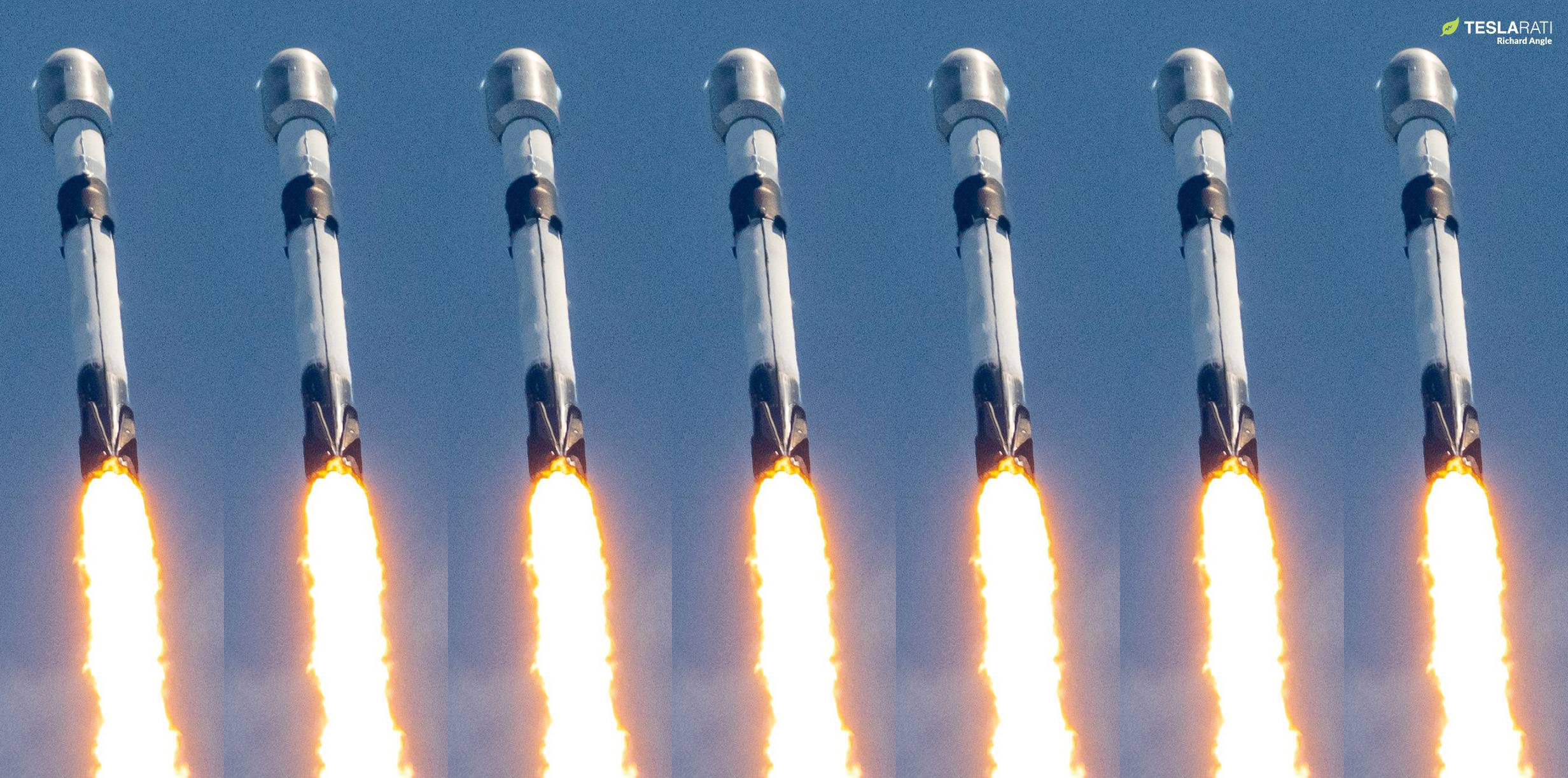
Despite pursuing the largest and most ambitious LEO constellations ever proposed, only SpaceX’s Starlink program has managed to avoid bankruptcy. SpaceX began developing Starlink in earnest in the mid-2010s and launched its first satellite prototypes in March 2018 and May 2019. Operational launches followed in November 2019, and SpaceX has since launched an unprecedented ~3540 working satellites on 70 Falcon 9 rockets. More importantly, just two years after opening orders, SpaceX has secured more than a million Starlink internet subscribers.
Adding to its impressive list of achievements, Gwynne Shotwell – a SpaceX executive known for being an excellent manager and voice of reason – says that Starlink has already had its first cash-flow-positive quarter.
The update that's rolling out to the fleet makes full use of the front and rear steering travel to minimize turning circle. In this case a reduction of 1.6 feet just over the air— Wes (@wmorrill3) April 16, 2024
According to Shotwell, that milestone happened sometime in 2022. Thanks to a productive 2021 and the accelerated launch of new Starlink satellites in 2022, continuously expanding network capacity, SpaceX’s subscriber count more than quadrupled between March and December. If Starlink truly did have a cash-flow-positive quarter last year, it likely happened in Q4. However, the nature of cash flow and the ambiguity in Shotwell’s statement are worth some amount of skepticism.
Crucially, cash flow should account for fundraising, which SpaceX does a lot of. In 2022, it closed a $1.7B venture round in May and a $250M private equity round in July, offering opportunities to negate otherwise negative cash flow in Q2 and Q3. If Shotwell means that Starlink had a positive cash flow quarter without accounting for fundraising, the achievement would be highly impressive and indicate that Starlink’s financial health is surprisingly good.
It’s also ambiguous if Shotwell meant that Starlink had a cash-flow-positive quarter in 2022 or if she was referring to the company as a whole. Earlier in her panel at the FAA’s annual Commercial Space Transportation Conference, Shotwell noted that SpaceX’s main product – Falcon rocket and Dragon spacecraft operations – “makes money.” She also said that “the cash flow from those operations basically pay for [Starlink and Starship] development.” External funds are then raised to supplement SpaceX’s profits from Falcon and Dragon.
The ambiguity leaves room for Shotwell’s statement to be interpreted a bit less positively. If SpaceX or Starlink’s cash-flow-positive quarter was contingent upon raising almost $2 billion in one calendar year, Starlink would arguably still be in a financially precarious position. A positive quarter in that context would be more indicative of decent accounting than good financial health.
However, Shotwell’s confident statement that “Starlink will make money” in 2023 was much less ambiguous and suggests that a positive interpretation of her “positive cash flow” comment could be more accurate. For Starlink to “make money” in 2023, the implication is that SpaceX expects annual revenue to exceed expenses – and possibly exceed expenses and external funding inputs.
Either outcome would be excellent. As long as Starlink’s revenue matches or exceeds expenses, the constellation could likely survive even if SpaceX’s access to external capital was partially or fully disrupted. It also bodes well for Starlink’s profit potential. If the Starlink Gen1 constellation is almost sustainable or profitable, the pending introduction of SpaceX’s next-gen Starship rocket and upgraded Gen2/V2.0 satellites could turn Starlink into a money printer.
In November 2021, CEO Elon Musk outright stated that SpaceX faced a “genuine risk of bankruptcy” if it couldn’t start launching Starship and Starlink V2.0 satellites “once every two weeks” by the end of 2022. Fifteen months later, Starship’s first launch is tracking towards March 2023, and there’s a nonzero chance the rocket won’t launch a single Starlink V2.0 satellite this year. Despite falling miles short of Musk’s target, Starlink is instead on the verge of becoming a sustainable business in the mind of SpaceX’s less hyperbolic leader.


Elon Musk
Tesla FSD mocks BMW human driver: Saves pedestrian from near miss
Tesla FSD anticipated a BMW driver’s lane drift before the human behind the wheel could react.

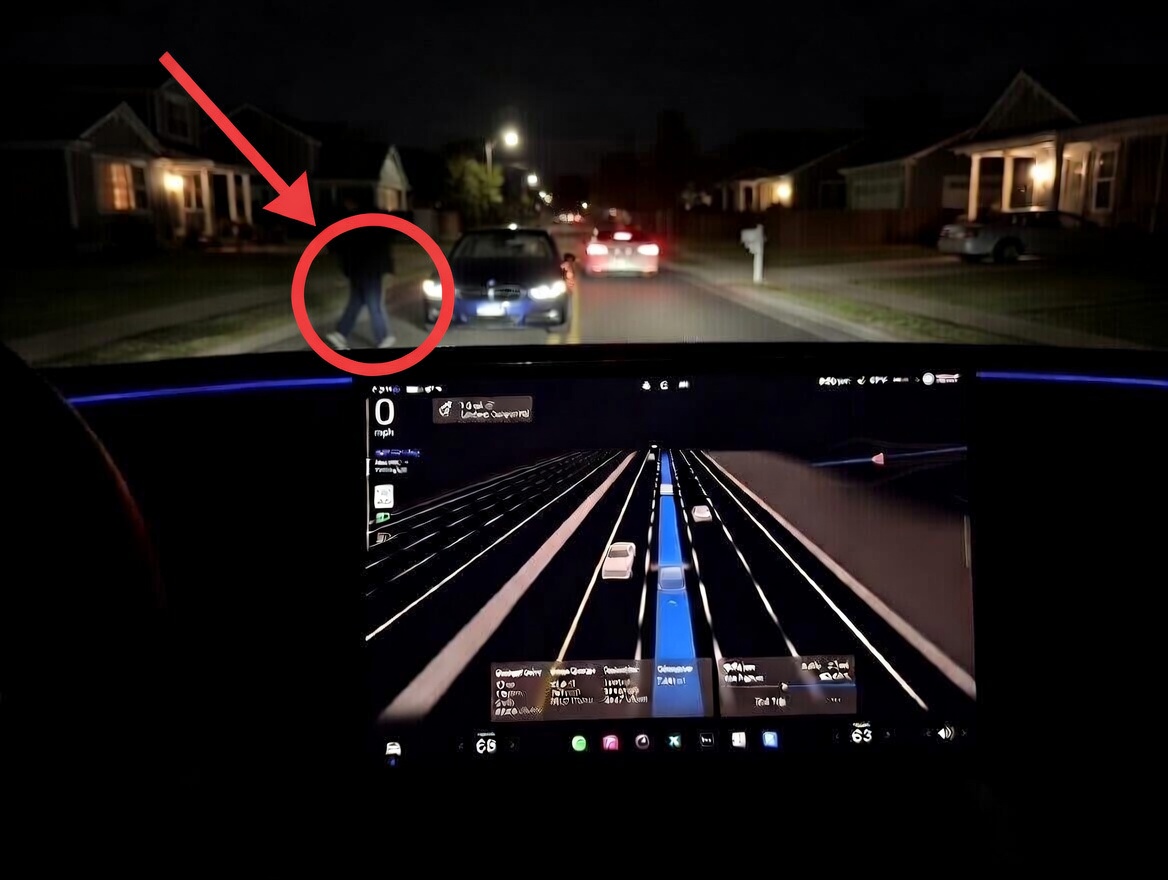
A video posted to r/TeslaFSD this week put a sharp spotlight on Tesla’s Full Self-Driving (FSD) software being able to react to pedestrian intent than an actual human driver behind the wheel. In the Reddit clip, a BMW driver can be seen rolling through a neighborhood street completely unaware of a pedestrian stepping in to cross. At the same time, a Tesla driving on FSD had already begun slowing down before the pedestrian even began their attempt to cross the street The BMW kept moving, prompting the pedestrian to hop back, while the Tesla came to a stop and provide right-of-way for the human to safely cross.
That gap between what the BMW driver saw and what FSD had already processed is the story. Tesla FSD wasn’t reacting to a person in the street, rather it was reading the signals that a person was about to enter it based on the pedestrian’s movement, trajectory, and their trajectory to telegraph intent.
Tesla’s FSD is now built on an end-to-end neural network trained on billions of real-world miles, learning to interpret subtle human behavioral cues the same way an experienced human driver does instinctively. The difference is consistency. A human driver distracted for two seconds misses what FSD does not.
Tesla sues California DMV over Autopilot and FSD advertising ruling
Reddit commenters in the thread were blunt about the BMW driver’s failure, with several pointing out that the pedestrian was visible well before the crossing. One response put it plainly that the car on FSD saw the situation developing before the human in the other car had registered there was a situation at all.
Tesla has published data showing FSD (Supervised) is 54% safer than a human driver, accumulated across billions of miles driven on the system. Elon Musk has said FSD v14 will outperform human drivers by a factor of two to three, and that v15 has “a shot” at a 10x improvement. Pedestrian safety is where the stakes are highest, and where intent prediction closes the gap fastest. At 30 mph, a car covers roughly 44 feet per second. An extra second of awareness from reading a person’s body language rather than waiting for them to step out is often the difference between a near miss and a fatality.
Video and community discussion: r/TeslaFSD on Reddit
FSD saves man from becoming a pancake. BMW driver nearly flattens him.
by
u/Qwertygolol in
TeslaFSD
News
Tesla Robotaxi gets a small but significant change
In the world of Tesla, where billion-dollar battery breakthroughs and autonomy milestones dominate headlines, a quiet design update can still pack a punch.

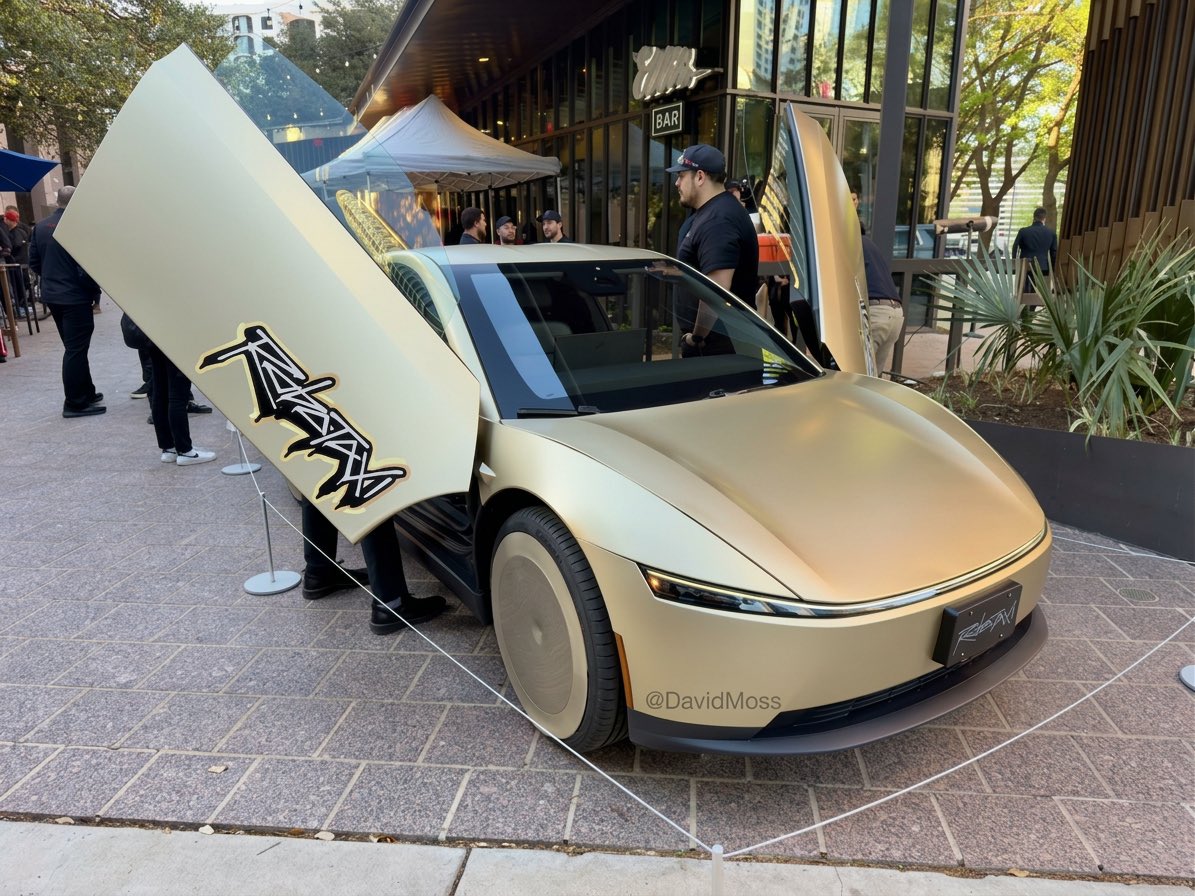
In the world of Tesla, where billion-dollar battery breakthroughs and autonomy milestones dominate headlines, a quiet design update can still pack a punch.
Last week in downtown Austin, sharp-eyed observers spotted a subtle but telling evolution on the Cybercab: a new “ROBOTAXI” logo graphic now graces the vehicle’s doors at Tesla’s Autonomy Popup.
What looks at first glance like a minor stylistic choice is, in fact, a deliberate rebranding move that hints at how the company envisions its robotaxi fleet fitting into everyday life.
The updated lettering is bold, graffiti-inspired, and unapologetically street-smart. Rendered in black with dripping white accents and a glowing yellow outline, the font evokes urban energy and playful irreverence.
Live From Downtown Austin:
Tesla Cybercab with new logo Graphic at their Autonomy Popup pic.twitter.com/MTTb9KDr3b
— David Moss (@DavidMoss) March 13, 2026
Gone is the sleek, minimalist typography that defined earlier Cybercab prototypes. In its place is something more human, almost rebellious.
The new logo pops against the Cybercab’s smooth, metallic body, turning the autonomous pod into a rolling piece of public art rather than just another futuristic taxi.
Designers know that fonts are silent brand ambassadors. They shape perception before a single ride is taken. Tesla’s classic sans-serif aesthetic screams precision engineering and Silicon Valley cool.
The new Robotaxi script leans into accessibility and fun, suggesting the vehicle is approachable, not intimidating. For a product meant to ferry strangers through city streets 24/7, that matters. It signals that the robotaxi isn’t reserved for tech elites; it’s for everyone.
Tesla Cybercab spotted next to Model Y shows size comparison
The timing is no accident. With regulatory approvals for unsupervised autonomy advancing and Tesla preparing to scale Cybercab production, the company is shifting from prototype showcase to fleet deployment.
A fresh logo helps differentiate the vehicles visually in dense urban environments—crucial for rider recognition and brand recall. It also aligns with Elon Musk’s long-standing ethos: make the future feel exciting, not sterile.
Small changes like this often foreshadow a larger strategy. Tesla has always obsessed over details—door handles, screen interfaces, even the curvature of a steering wheel.
Updating the Robotaxi font reflects the same meticulous care now applied to consumer-facing autonomy. It’s not just paint on metal; it’s a statement that the ride of the future should feel personal, memorable, and undeniably cool.
In an industry racing toward self-driving fleets, Tesla’s willingness to evolve even the smallest visual cues shows confidence. A font won’t launch the robotaxi network, but it might just help millions climb aboard with a smile.
News
Tesla makes latest announcement on Model S and Model X
The announcement follows Tesla CEO Elon Musk’s statement on the Q4 2025 earnings call in late January. Musk described the decision as an “honorable discharge” for the two vehicles, noting that production would wind down in Q2 2026.
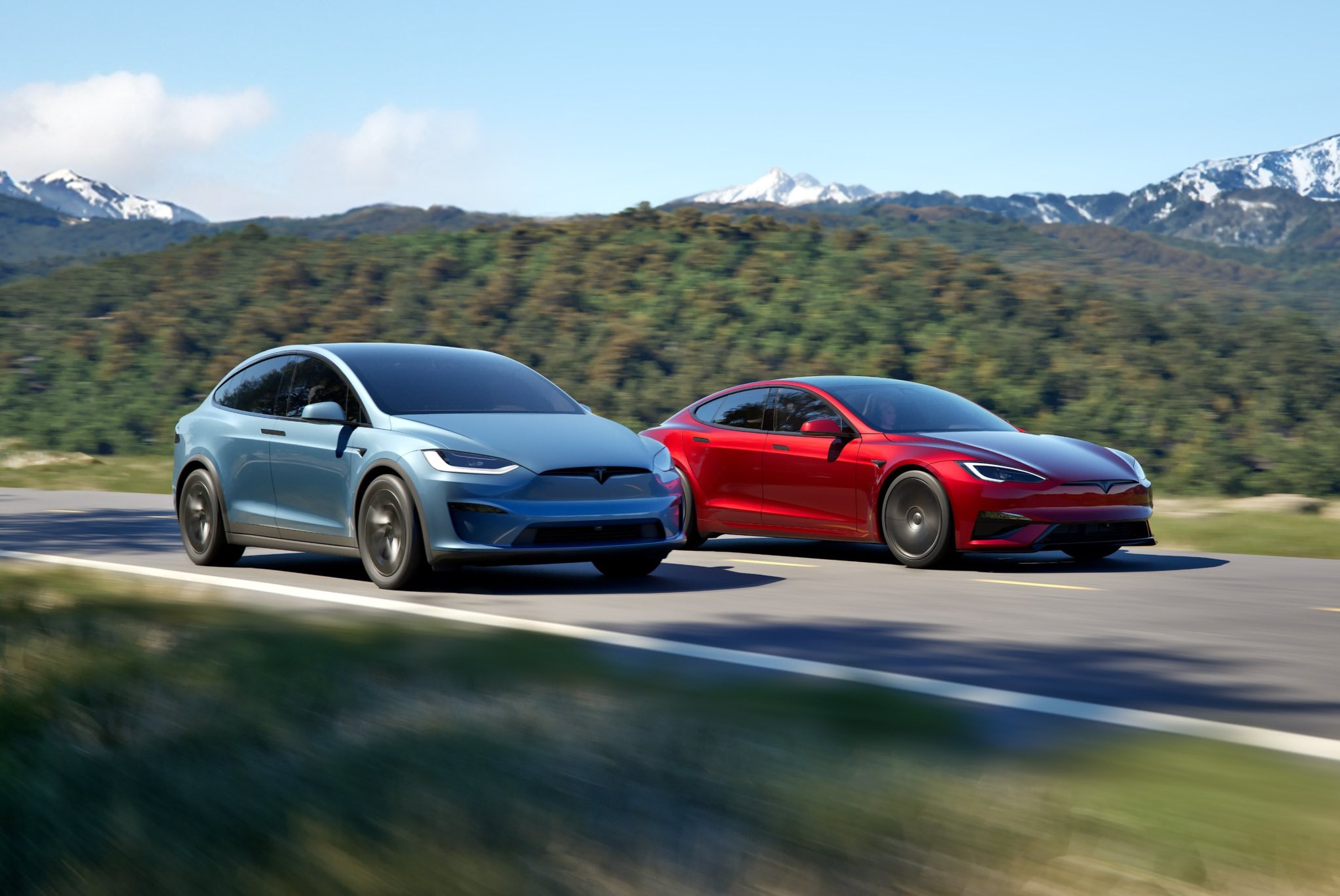
Tesla has officially begun winding down production of its flagship Model S and Model X in the United States, notifying owners via email that the long-running models will soon reach the end of the line.
The email, sent to U.S. customers on March 27, opens with gratitude. “Model S and Model X marked the beginning of the world’s transition to electric transportation,” it reads. “These vehicles also made it possible for Tesla to develop the technology that would move our world toward autonomy.”
It then delivers the news directly: “As we make way for this autonomous future, Model S and Model X production will be ending. If you’d like to bring home a new Model S or Model X, order yours soon from our limited inventory.”
Tesla just sent out a new email thanking Model S/X owners.
“These vehicles made it possible for Tesla to develop the technology that would move our world toward autonomy. As we make way for this autonomous future, Model S and Model X production will be ending. If you’d like to… pic.twitter.com/IeUhZ3iDnX
— Sawyer Merritt (@SawyerMerritt) March 27, 2026
The message closes with a simple thank-you: “Thank you for being part of our journey.”
The announcement follows Tesla CEO Elon Musk’s statement on the Q4 2025 earnings call in late January. Musk described the decision as an “honorable discharge” for the two vehicles, noting that production would wind down in Q2 2026.
The move frees factory floor space at Fremont, California, for next-generation manufacturing, including Optimus humanoid robots and the upcoming Robotaxi platform.
Introduced in 2012 and 2015, respectively, the Model S and Model X were Tesla’s original halo cars. They proved EVs could outperform gasoline luxury vehicles in acceleration, range, and tech features while pioneering over-the-air updates and early autonomy hardware.
Although they never matched the volume of the Model 3 and Model Y, their engineering breakthroughs laid the foundation for the company’s current lineup and full self-driving development.
Early adopters highlighted how the cars convinced them to invest in Tesla stock and the EV movement. Some U.S. owners who had not yet received the note voiced mild frustration, and international customers confirmed the outreach remains U.S.-only for now.
Tesla has not detailed an exact final production date beyond the Q2 2026 target or confirmed immediate replacements. Speculation continues about a possible Cybertruck-derived SUV, but the company’s public focus has shifted squarely to autonomy and robotics.
For buyers still interested in the S or X, the window is closing. Inventory is described as limited, and Tesla’s Korean division has already set a March 31 cutoff for new orders in that market. The email serves as both a farewell and final sales push, an elegant close to a chapter that helped define modern electric driving.

Tesla FSD mocks BMW human driver: Saves pedestrian from near miss

Tesla Robotaxi gets a small but significant change

Tesla makes latest announcement on Model S and Model X

Elon Musk says Tesla is developing a new vehicle: ‘Way cooler than a minivan’

Elon Musk launches TERAFAB: The $25B Tesla-SpaceXAI chip factory that will rewire the AI industry


